

Three Weekly Checks for Your Industrial Laundry Equipment
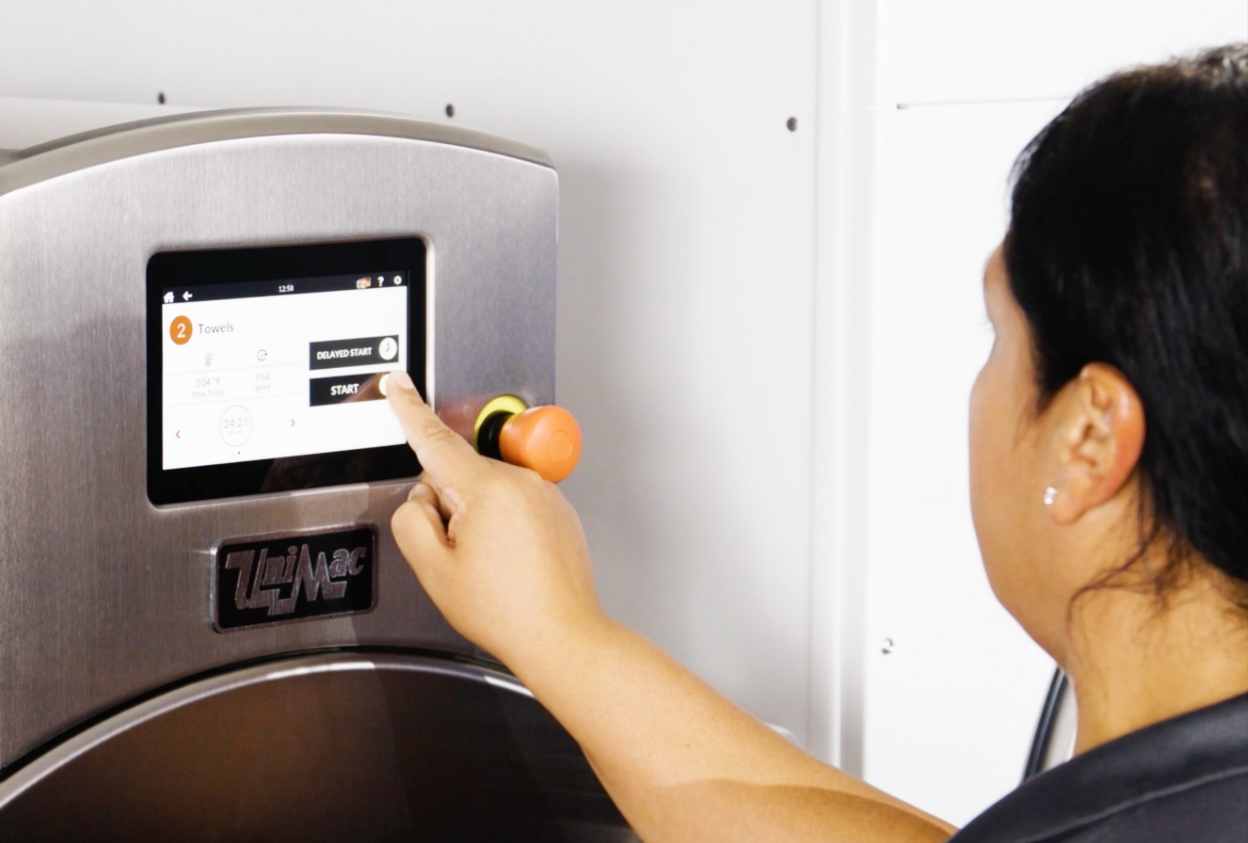
A service alert can sit unread for days before the machine it’s attached to finally stops mid-cycle, often in the middle of a shift. Catching alerts early is what could separate a smooth week from a breakdown.
Reviewing data points like service alerts, usage trends and uptime data can address many of the things needed to keep your industrial laundry equipment running efficiently.
The good news is that with the right on-premises laundry equipment and laundry technology, getting in a rhythm of weekly check-ins goes a long way toward keeping your facility running smoothly.
Why Regular OPL Laundry Equipment Checks Work
For most OPL teams, daily equipment checks aren’t realistic.
Machines built for industrial-grade throughput are designed to run reliably between checks. The goal isn’t watching equipment constantly; it’s knowing which data points tend to change week to week versus which ones only matter when something goes wrong. If you only have a few minutes to spare each week, here are the three checks that make the biggest difference for your OPL team.
1. Service Alerts on Your Industrial Laundry Equipment
What’s one of the earliest signals your industrial laundry equipment can give you? Service alerts.
Rather than waiting for a machine to stop mid-cycle, you can leverage laundry technology to identify issues early. UniMac® CORE can help surface alerts as soon as a component needs attention, whether that’s a filter, a valve or a cycle irregularity.
A weekly review of open and recent alerts helps teams:
- Catch small issues before they become downtime
- Prioritize which machine needs a technician first
- Avoid the troubleshooting scramble that eats up a Monday morning when a problem goes unnoticed all weekend.
Same-day alerts already get handled. What the weekly review catches is the alert that’s been open for several days without action, and that’s usually the one worth prioritizing first.
2. OPL Equipment Usage Trends to Watch
Not every issue is mechanical. A spike in cycle times or utility use is often the first sign. It usually means a habit has crept into daily operations, like running smaller loads than usual or picking a cycle that doesn’t match the fabric being washed.
CORE’s reporting and analytics give facility managers a week-over-week view of:
- Cycle run times by machine
- Utility performance trends
- Load patterns that deviate from normal operation
3. Uptime Data for OPL Laundry Equipment
The third check is the simplest and easiest to overlook: confirming that every machine on the floor is available and running when it should. A regular review of uptime data can help surface a gap quickly, reducing the chances that downtime catches your team off guard.
For teams managing industrial washing machines and dryers across a busy laundry room, this check is also a useful prompt for planning ahead: flagging a machine for preventive service, scheduling UniMac dryer parts before a component fails outright or simply confirming the floor is running the way it should be.
Making Weekly Checks Part of the Routine
None of this requires a dedicated data analyst or a daily obligation. You just need a consistent routine and a platform that surfaces the right information without requiring a manual walk of the laundry room.
UniMac CORE was built for exactly this. It gives facility managers access to operations data, service alerts and performance analytics through a single app and web portal. Plus, it’s designed to make the weekly check-in take a few minutes, instead of several hours.
Industrial laundry equipment is designed to run efficiently under continuous, high-volume use, but that performance holds up best when it’s checked regularly, not assumed.
Common Questions: How to Check Industrial Laundry Equipment Performance
1. What should facility managers check weekly on industrial laundry equipment?
Three things: open service alerts, usage trends (like cycle times and utility performance) and uptime data confirming machines ran when they should have. Connected platforms like UniMac CORE surface all three in one place.
2. How does connected laundry data help manage OPL equipment?
Connected laundry data can turn a manual walk of the laundry room into a review that takes minutes, not hours, giving facility managers a consistent way to catch small issues, shifting routines and downtime gaps before they grow into larger maintenance or utility costs.
3. How often should industrial laundry equipment be inspected?
Beyond normal daily operation, industrial laundry equipment benefits most from a focused weekly review covering service alerts, usage trends and uptime data. Anything flagged as urgent should get attention right away; everything else can wait for that weekly check, which is exactly the rhythm UniMac CORE is designed to support.
