

5 Signs Your Industrial or Commercial Dryers Are Overdrying Your Linens
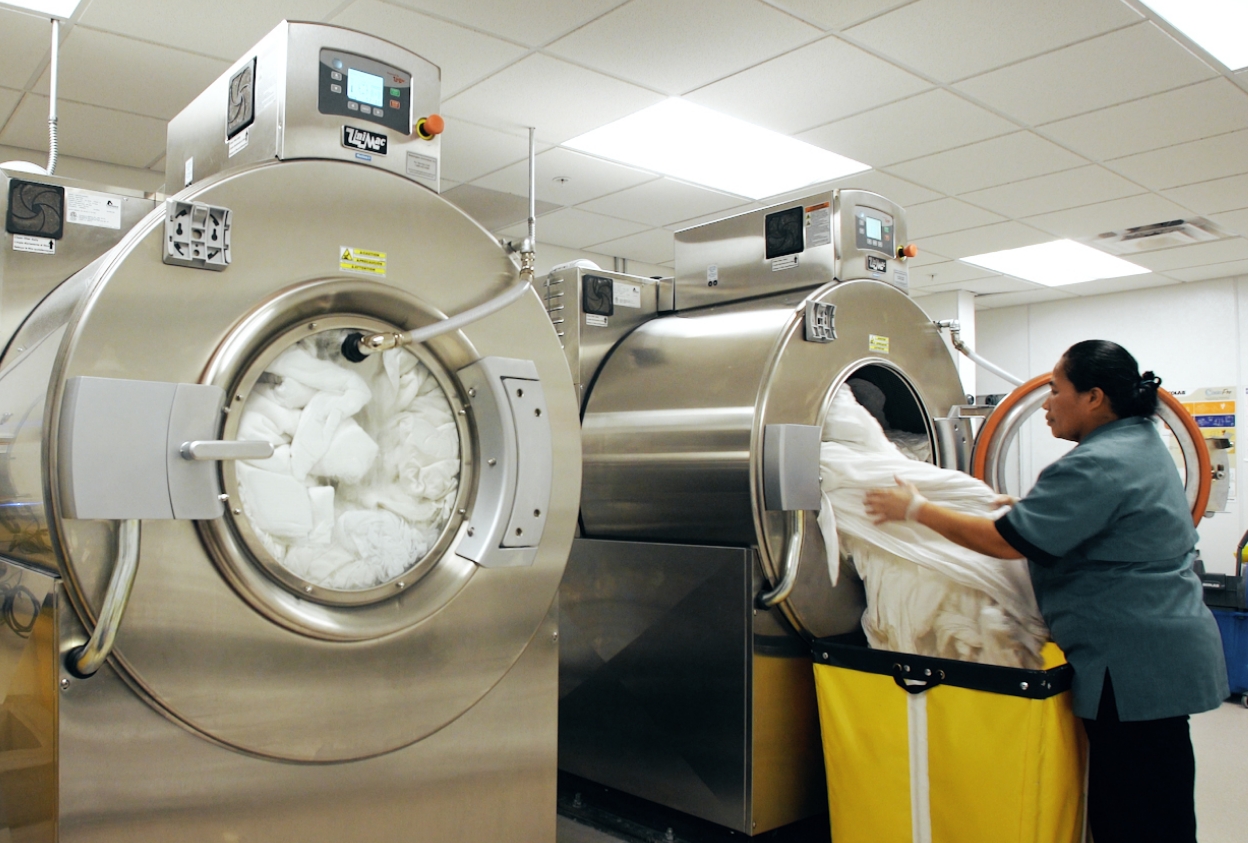
End of shift. You pull a load of towels and they come out hot, stiff and crisp. The dryer didn't fail. It may simply have kept running after the job was done.
If an industrial or commercial dryer machine keeps heating after the moisture is gone, it can result in stiff towels, heavy lint, graying whites and linens that wear out early. One practical fix is to end the cycle at the right moisture level, instead of guessing the best time. That's the thinking behind UniMac® OPTidry™ Over-Dry Prevention Technology, engineered for the industrial performance on-premises laundry operations expect and designed to end each cycle when linens reach the dryness level you set.
Does your team set dry times long just to be safe? You're in good company. Plenty of on-premises laundry (OPL) teams do, because it feels like a careful choice. But those extra minutes can cost more than they seem to: gas or electricity burned on dry linens, a team member waiting on the machine and sheets that need replacing sooner than planned.
How Can You Tell If Linens Are Overdrying in Your Commercial Dryer?
Once the water's gone, the heat starts working on the fibers instead. Cotton can lose flexibility and shed lint. Here are five signs to look for:
- Harsh or stiff towels. Extra heat can leave fibers rough instead of soft.
- Heavy lint. A lint filter that fills fast, or lint collecting near exterior vents, can point to fibers breaking down. It's also a daily cleanup job, and UniMac ProCapture™ is designed to make that job easier (more on that below).
- Graying whites. Overdried linens can pull airborne particles back into the fibers.
- Wrinkles and static. Linens that leave the dryer bone dry often wrinkle more and cling.
- Earlier replacements. Sheets can thin out and towels may fray sooner than your par levels planned for.
How Dry Should Linens Be When They Leave the Dryer?
Here's the twist: bone dry isn't the goal. A little moisture in the load may help limit wrinkles. That's one of the reasons why it can help to dry by moisture instead of minutes. UniMac OPTidry™ pairs moisture sensing with step drying. Available on UniMac UniLinc™ Touch machines and select M Series control packages, step drying uses high heat until the load is half dry, then the temperature is lowered for the remainder of the cycle.
What Does Overdrying Cost Your Laundry Room?
Start with the clock. Time three typical loads from start to dry, then compare the results with your set cycle time. The gap can help you identify minutes you may be paying for on each cycle.
Five minutes sounds harmless. Across 20 cycles, it's 100 minutes of heat and waiting, every day. Your numbers will differ. Moisture sensing is designed to help reduce those minutes, because the cycle ends when linens reach the dryness level you set instead of when a timer runs out.
How Do You Stop Overdrying in an Industrial Dryer?
Four changes can help, whether you run a single commercial dryer machine or a full bank of industrial dryers:
- Start at the washer-extractor. Higher extraction speed leaves less water to dry, which may help shorten the dry cycle.
- Keep loads consistent. Dry similar fabrics and weights together, within your commercial tumble dryer's rated capacity. Heavy items like comforters can ball up and leave the center damp, so they do best apart from lighter linens. Pieces that dry at a similar pace can finish together, with less need to add minutes.
- Dry by moisture instead of minutes. Moisture sensing ends the cycle when linens reach the dryness level you set. UniMac® OPTidry™ Over-Dry Prevention Technology does this by measuring conductivity between two electrically isolated lifters and the cylinder wall.
- Let linens rest after the dry cycle is complete. Taking a break can give fibers time to relax before linens go back into rotation.
When you compare industrial drying solutions, ask three questions: What does the dryer measure? Can you set the dryness level yourself? Can shifts run it the same way? Barry Morrill, president of Child's Linen Service, says anybody he puts on his UniMac equipment "can go right to the screen."
What Can You Do About Heavy Lint in an Industrial Dryer?
Heavy lint is more than a warning sign. It's a chore, and in a busy laundry, it never stops. Fernando Sibulo, Director of Engineering at The Moran at CityCentre in Houston, works in a hotel where the laundry runs almost 12 hours a day, with towels, hand towels and linens cycling through nonstop. Lint cleanup was his team's number one issue. A lint collector installed in the ceiling meant climbing up with a ladder and a second person, which he calls a safety issue too. Cleaning the screen could take almost a day.
That's the kind of problem UniMac ProCapture is designed to address. UniMac developed its cyclone technology as an industrial efficiency investment aimed at lint and its downstream operational impacts. It captures lint before it reaches the exhaust duct, which can mean less buildup and less cleaning. After the hotel moved to new equipment with a lint collector, Fernando put it simply: "It just stays in the unit, so it's very easy to clean."
Think of it as two jobs. Moisture sensing is designed to address one cause of excess lint, which is linens that keep tumbling after they're dry. ProCapture is designed to make the lint that remains easier to manage.
Industrial Dryer Questions OPL Managers Ask
Is timed dry or automatic dry better in an industrial dryer?
Timed dry works when loads are identical and tested. Automatic dry fits better when load size and fabric change throughout the day, because the cycle ends when linens reach the set dryness level, not at a fixed minute.
Why does my industrial dryer take so long to dry linens?
The usual suspects include too much water left after extraction, overloaded drums, a full lint filter and restricted exhaust airflow. Start with extraction and load size, then have a qualified technician inspect the exhaust path.
Are moisture-sensing dryers green laundry machines?
Green is a broad label, so look at specifics. A dryer that ends the cycle at the set dryness level is designed to cut wasted heat and cycle time, which supports energy efficiency, depending on configuration and operating conditions. When you shop for green laundry machines, ask your distributor for energy use measured under stated conditions, not just a label.
Which UniMac dryers offer OPTidry technology?
OPTidry is available on UniMac dryers with UniLinc™ Touch control and select M Series control packages.
Learn More About Industrial and Commercial Drying Solutions
Gentler treatment of linens, less wasted dryer time and one dry-time standard for shifts are all worth planning around.
Connect with your UniMac distributor to discuss which commercial and industrial drying solutions may best fit your operation.
