

Five Factors to Weigh Before Selecting Industrial Laundry Equipment
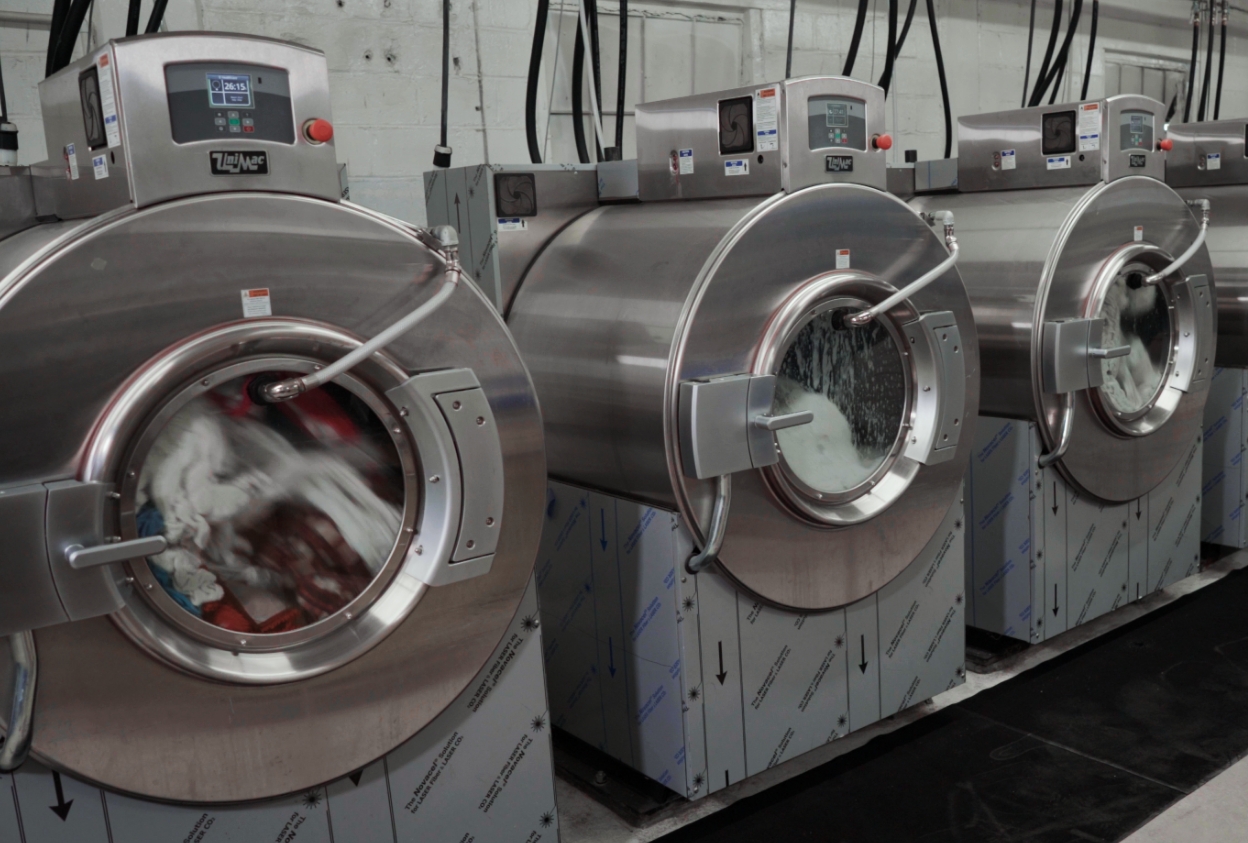
Researching and sizing industrial laundry equipment is seldom as simple as picking the biggest machine on the spec sheet. Instead, making the right decision for your facility’s laundry room comes down to matching your daily pound volume, peak demand, soil level and floor space to a high-performance machine built to handle the load. Get the math wrong and it shows up fast, in overtime hours clearing a backlog, or in a large industrial washer you’re still paying for that runs under capacity.
For on-premises laundry (OPL) managers comparing washer-extractors and tumble dryers, UniMac® built its industrial OPL equipment lineup around this exact planning problem: sizing right the first time instead of guessing and hoping to grow into it later. Here are five factors to weigh before you compare capacities.
1. Calculate, Not Guesstimate
To determine your throughput, start with the weight of dry linens your facility generates in a day: multiply room or bed count by average pounds of linen per room or bed, then check that baseline against two things:
- Occupancy patterns: A facility with weekend or seasonal spikes should size for that peak rather than the daily average.
- Operating hours: A 1,000-pound daily load looks different across one eight-hour shift than across two shifts.
The second shift is the norm for many facilities, rather than the exception. Fernando Sibulo, Director of Engineering at HEI Hotels & Resorts, The Moran at CityCentre, describes a room that never really stops. “Our laundry works almost 12 hours a day. We have towels, we have hand towels, we have linen. They’re nonstop.” Size for the day your team experiences, not the one on the brochure.
2. Factor in Linen Type and Soil Level
Bulky items such as comforters and blankets need more cylinder volume per pound than flat sheets, so bedding-heavy facilities need more capacity than the pound count alone suggests.
Soil level matters, too. Heavily soiled linens from food service or healthcare settings typically need longer wash cycles and more water, which means fewer loads per hour even when rated capacity stays the same.
3. Compare G-Force and Cycle Time Across Options
G-Force is the extraction force applied during the spin cycle. Higher G-Force pulls more water out of the load before it reaches the dryer, which shortens dry time and adds throughput to the whole laundry room, not just the washer.
For example, UniMac’s pocket hardmount UW series reaches up to 400 G-Force, while its cabinet hardmount UC series tops out at 200 G-Force. When comparing industrial washer-extractor options, ask for the full cycle time, from fill through extract, not just the top spin speed. Cycle length varies with soil level, fabric type and programming, so compare machines under the conditions your facility runs.
Dryers belong in the same calculation. A tumble dryer that cannot keep pace with washer output creates its own bottleneck, so match dryer capacity to the wet pounds your washer-extractors deliver per hour. UniMac’s UT series tumble dryers are designed to reduce dry times to match wash cycle times, so both sides of the laundry room work at the same pace.
Rated capacity isn’t the same as real-world loading, a detail that trips up a lot of facilities. The goal is to load to rated capacity without overloading. Follow the loading guidance in the installation and operation manual for your specific model and bring any questions to your distributor.
4. Confirm Your Facility Can Support a Large Industrial Washer or Tumble Dryer
Industrial equipment sized correctly on paper still needs a building that can support it.
- Utilities. Before finalizing a capacity, confirm your facility’s electrical voltage and phase, water pressure, drain size and gas or steam lines can handle heavy-duty extraction.
- Floor load. High-extract washers put dynamic force on the floor beneath them. A hardmount washer-extractor needs a thick, on-grade concrete slab, while a softmount configuration is built to absorb vibration on upper floors or where anchoring isn’t an option. Tumble dryers bring a different set of site requirements: exhaust duct routing, makeup air and clearance around the machine. Confirm all three before finalizing dryer capacity.
- Loading path. Measure doorways, hallways and ceiling heights. A large industrial washer or dryer that won’t fit through the loading path isn’t an option no matter how well it fits the throughput math.
5. Plan for Growth and Redundancy, Not Just Today’s Load
Sizing today’s exact volume can set up a second capital request sooner than you would like, so weigh your organization’s three-to-five-year growth plan against the cost of added capacity or technology now.
Redundancy deserves the same consideration. A single large washer-extractor or tumble dryer can also be a single point of failure. Many OPL managers choose two mid-sized machines instead of one large unit, so the laundry room can keep running at partial capacity if one machine needs service.
Downtime is the cost that never shows up on a spec sheet. Tom Zengeler, fifth-generation owner of Chicago-area Zengeler Cleaners, put it plainly in a UniMac case study, “One thing is certain: we simply can’t have a machine go down. The UniMac duo has become that important to the success of our business.” At the time, his two 65-pound UniMac washer-extractors had been in service since 1985, running from 5 a.m. to 3 p.m. six days a week. Plan your capacity so a service call is an inconvenience, not a crisis.
Technology belongs on the checklist, too. As you plan new equipment, look at how controls and connected features can take recurring pain points off your team’s plate: lint capture that keeps dryers and ductwork cleaner, remote monitoring and programming through a connected platform such as UniMac’s CORE, and moisture sensing such as OPTidry that stops a tumble dryer when the load is dry instead of running out a timer. The right feature set can return hours to your team every week.
Sized to actual volume, industrial laundry equipment can keep pace with today’s demand and leave room to grow, without turning into next year’s capital request. UniMac’s durable on-premises laundry equipment lineup spans pocket hardmount, cabinet hardmount and softmount washer-extractors, plus single-pocket and stacked tumble dryers, across a wide range of capacities, so the equipment gets sized to your floor and workload, not the other way around.
Frequently Asked Questions About Sizing and Installing Industrial Laundry Equipment
What's the real difference between a hardmount and a softmount washer-extractor?
A hardmount transmits extraction force directly into a concrete slab, so it needs on-grade anchoring. A softmount absorbs that vibration internally with springs and shocks, which makes it the better fit for upper floors or buildings where anchoring isn't possible.
How do I size a tumble dryer to match my washer-extractors?
Start with the wet pounds your washer-extractors deliver per hour and the dry time for your linen mix, then confirm the dryer can clear that volume in the same window. Higher G-Force extraction shortens dry time, which is why washer and dryer choices are best made together rather than one at a time.
Does a higher-capacity machine always cost more to run?
Not necessarily. A quality washer-extractor or tumble dryer sized correctly for your actual volume, rather than oversized "just in case," supports the goal of the lowest cost of ownership, since idle capacity and overtime both carry a cost of their own.
How long does installation take once a machine is sized?
The answer depends on site prep, including confirming electrical, water and drain capacity. For an accurate idea, connect with your local distributor.
What maintenance keeps industrial laundry equipment running at full capacity?
Routine bearing, seal and drain checks on washer-extractors, and lint and exhaust checks on tumble dryers, matter more as duty cycles climb, since a two-shift operation puts more wear on a machine than a single-shift operation does.
Who should I talk to about right-sizing my OPL laundry room?
A UniMac distributor can walk your facility's throughput, floor plan and infrastructure against the full washer-extractor and tumble dryer lineup to help you narrow in on the right capacity before you buy.
